
Quick answer: Match each reward to what that customer is worth to you: cheap, useful items for entry-level point redemptions, better everyday pieces for regular buyers, and premium desk or leather gifts for VIPs. Then secure the supply before you launch, because a rewards catalogue that shows “out of stock” hurts loyalty more than having no rewards at all. A local manufacturer that restocks in days, not weeks, keeps it full.
Last year I sat in a Jeddah boardroom with a retail client who had burned through six months of loyalty merchandise in three weeks. The app was good. The launch campaign was good. Somebody had guessed the redemption rate, guessed low, and nobody had asked the factory how fast more stock could be made.
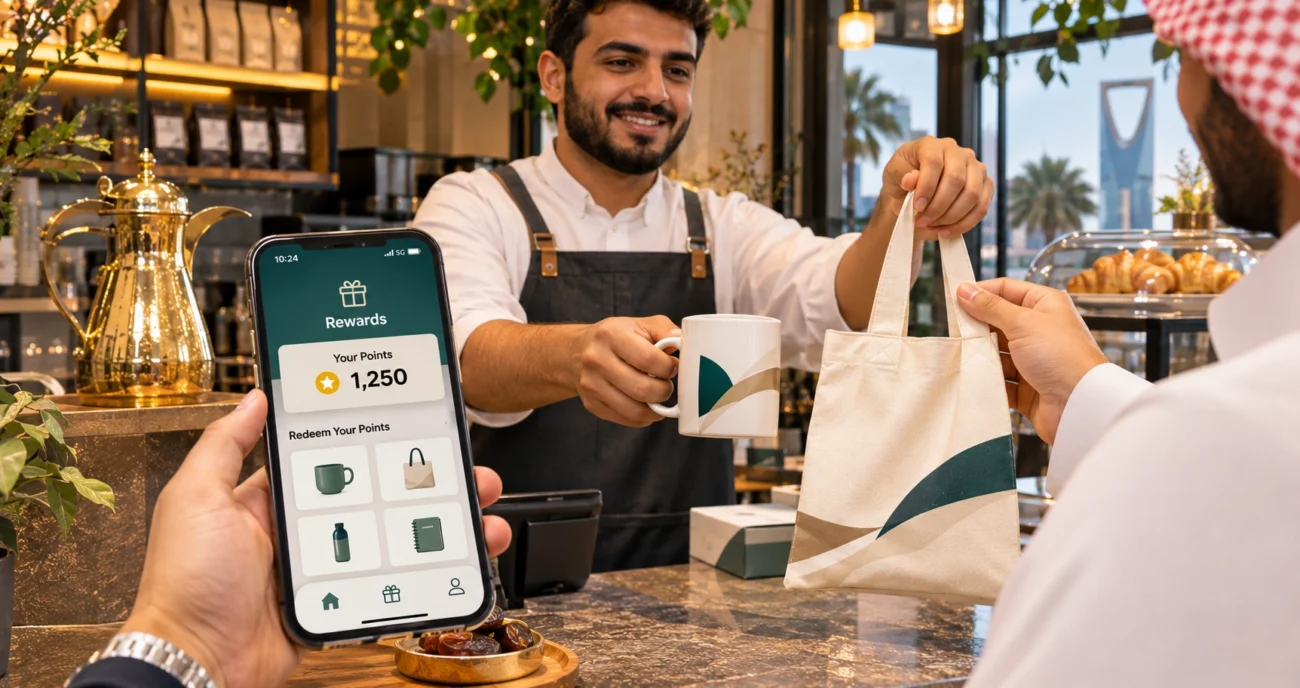
That is the pattern I keep seeing with loyalty programmes (برامج الولاء) across the Kingdom. The app gets built first and the physical rewards get figured out later. Here is the logistical reality: a loyalty gift is not a giveaway. The customer paid for it with months of repeat visits, and they judge it that way.
The spending is in exactly the categories where loyalty schemes live. In the week ending 1 August 2026, restaurant and café spending rose 24.4% to SR2.04 billion, the second-largest category in SAMA’s point-of-sale data. Every coffee chain fighting for that money is fighting for the same repeat customer, and a small branded reward is one of the few things it can actually put in that customer’s hand.
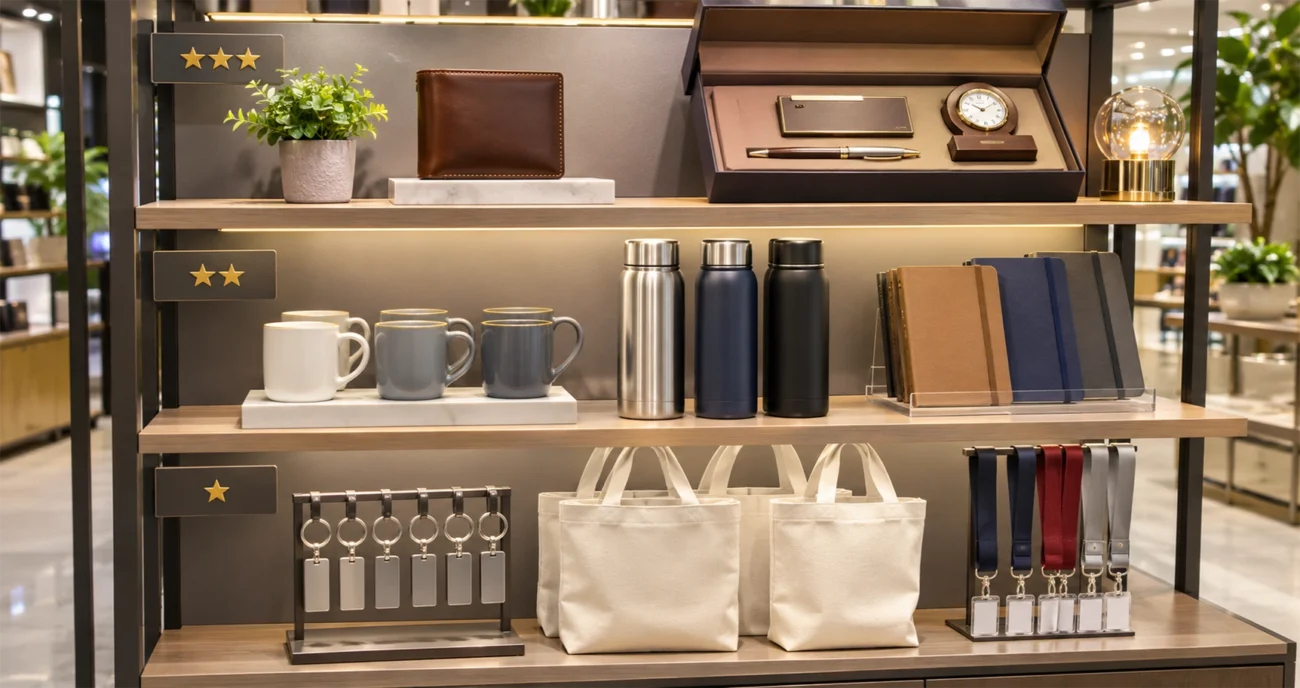
Loyalty gift tiers at a glance
| Loyalty Tier | Customer Value | Recommended Gift Type | Branding Strategy |
|---|---|---|---|
| Tier 1 (Entry/Points Redemption) | New or occasional customers; low spend per visit | Everyday items: metal key holders, cotton tote bags, lanyards, pens | Small one-color logo, pad or screen printed |
| Tier 2 (Mid-Level Retention) | Regular buyers with steady monthly spend | Ceramic mugs, thermal bottles, notebooks, desk items | Logo plus a design people want to use; UV or sublimation where it suits |
| Tier 3 (VIP/Brand Advocate) | Top spenders and advocates; highest lifetime value | Leather goods, premium tech, engraved desk sets in a gift box | Discreet logo, customer’s name engraved, premium packaging |
The Logistics of Customer Loyalty Gifts in Saudi Arabia
Why “Small and Useful” Beats “Large and Cheap”
Let’s be blunt. You will humiliate your brand if a customer cashes in 10,000 loyalty points for a plastic keychain that snaps the same week. The customer did the work. They came back forty times. A broken reward does not read as a small letdown; it reads as proof the programme was never really for them.
This is where loyalty rewards break the usual rules. The difference between promotional and corporate gifts is normally cheap-and-wide versus personal-and-narrow, and هدايا العملاء in a loyalty programme sit awkwardly in the middle. They are mass-produced, but they are earned. So they need giveaway economics with gift-level quality.
In practice the sweet spot is small, solid and used daily. Metal key holders instead of plastic keychains. Thick ceramic mugs instead of thin promotional cups. Heavy jute and cotton bags that survive the weekly grocery run, not a flimsy non-woven bag that tears at the handle.
Small also matters at the branch. Every reward has to sit behind a counter, get counted at shift change and be handed over the moment the app says the customer earned it. Bulky or fragile items mean breakage, arguments with branch managers over storage space, and a lot of “we’ll call you when it arrives.”
Mapping the Customer Journey (Tier 1 vs. VIP Rewards)
Before you pick a single item, work out what each tier of customer is worth. Customer lifetime value is the number that matters: the total profit you expect from a customer over the whole relationship. The reward is a slice of that, and the slice has to stay small enough for the programme to pay for itself.
My rule of thumb: the perceived value of the reward should slightly exceed the effort it took to earn it. If it feels like less, the customer feels cheated. If it is wildly more, you are giving away margin you will want back next year.
For customers redeeming their first few hundred points, high-utility promotional products like tote bags, key holders and lanyards do the job. They cost little, people use them every day, and your logo travels with them, which is a bonus rather than the point.
When a customer hits the middle tier, they expect more than a pen. This is where premium general gifts come into play: a well-made mug, a good notebook, or an insulated bottle that keeps gahwa (قهوة) hot through a long afternoon.
VIPs are a different conversation. The standard for corporate gifts in Saudi Arabia in B2B and luxury retail applies here: leather, metal, a proper gift box and often the customer’s name engraved. One caution if you personalize from app data: make sure the customer agreed to that use. Saudi Arabia’s Personal Data Protection Law has been fully enforceable since September 2024.
Manufacturing and Branding Loyalty Gifts on the Factory Floor
Cost-Effective Branding (Pad Printing, Screen Printing and UV DTF)
Look at the factory floor. To keep a loyalty programme profitable, you cannot laser-engrave every entry-level item. Engraving is slow per piece and belongs in the VIP tier. Each item gets the cheapest method that will still survive the way it is used.
Pad printing: a one- or two-color logo is transferred from an etched plate onto small, curved surfaces such as pens, key holders and bottle caps. Once the plate is made, runs are fast and the unit cost is low.
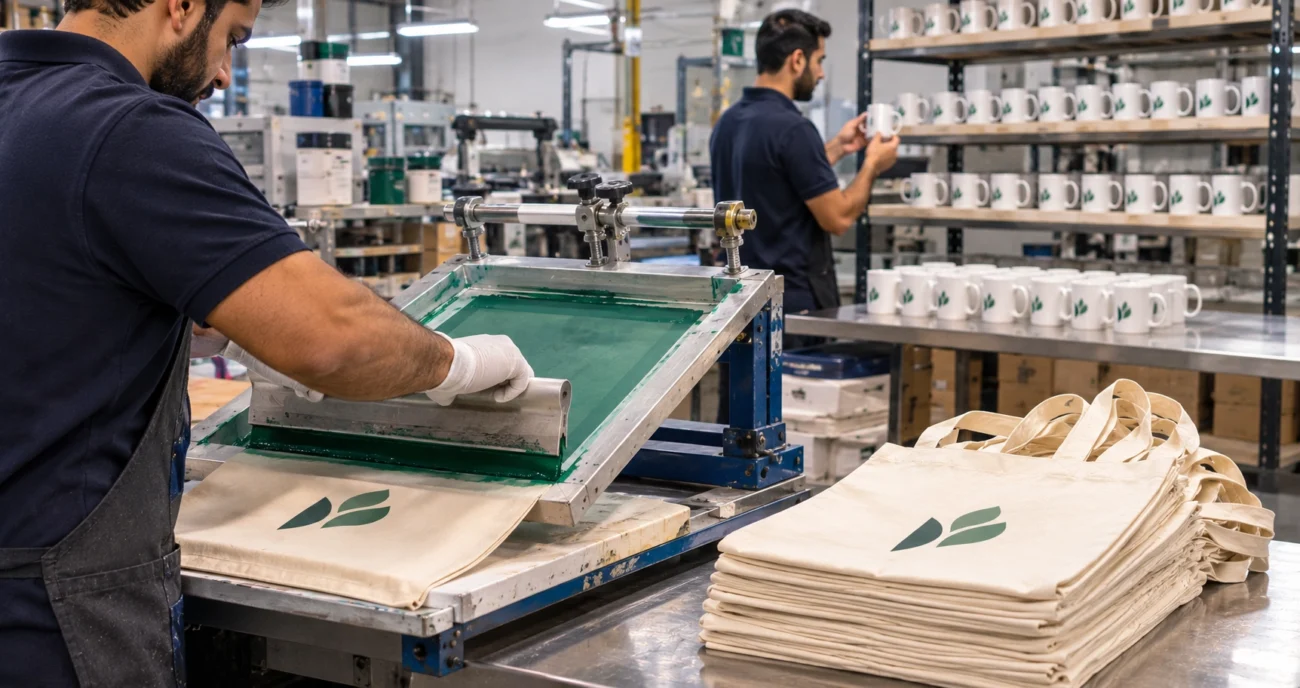
Screen printing: canvas and cotton tote bags are screen printed in batches of thousands to keep the unit cost down. Each color needs its own screen, so the setup cost is fixed and every extra bag spreads it thinner. Two colors cost noticeably more than one.
Mugs: depending on the mug, they are sublimated, screen printed or UV printed, and that choice decides how the print survives a café dishwasher every day. For a coffee chain’s reward mug, ask for a wash-tested sample before you sign off.
UV DTF: the design is printed onto a transfer film and applied to bottles, tumblers or boxes. It handles full-color logos and short runs well, but it is a surface print, so keep it off items that get scrubbed daily.
When a Riyadh coffee chain’s rewards app took off, we ran 10,000 branded ceramic mugs in back-to-back batches just to keep the reward available in the app. Making the mug was never the hard part. Keeping the print identical from the first batch to the tenth was, which is why the approved sample stays on the line and every batch is checked against it.
The cheapest improvement most programmes can make costs nothing: a clean one-color vector logo. It prints fast on almost every method, and it keeps repeat batches consistent.
The Hidden Logistics Trap of Overseas Fulfillment
Here is the stockout nightmare. A brand launches a rewards app, it catches on, and the physical gifts are gone in a month. If the supplier is overseas, the reorder means a new production slot, sea freight and customs: three to five weeks door to door at best, longer if the factory is booked or a holiday gets in the way. For all of that time the catalogue says “out of stock,” and members quietly stop opening the app.
Peaks make it worse. In the week ending 15 August 2026, education-related spending jumped 62.7% week on week as families got ready for the new school term. A programme running a back-to-school reward tends to see redemptions spike in that same fortnight, and Ramadan does the same for food and café brands.
More of it is moving online, too. GASTAT’s e-commerce sales index rose 9.8% year on year in Q2 2026, with retail e-sales up 13.4%. An online reward gets posted to an address rather than handed over a counter, which adds packing and courier time to every redemption.
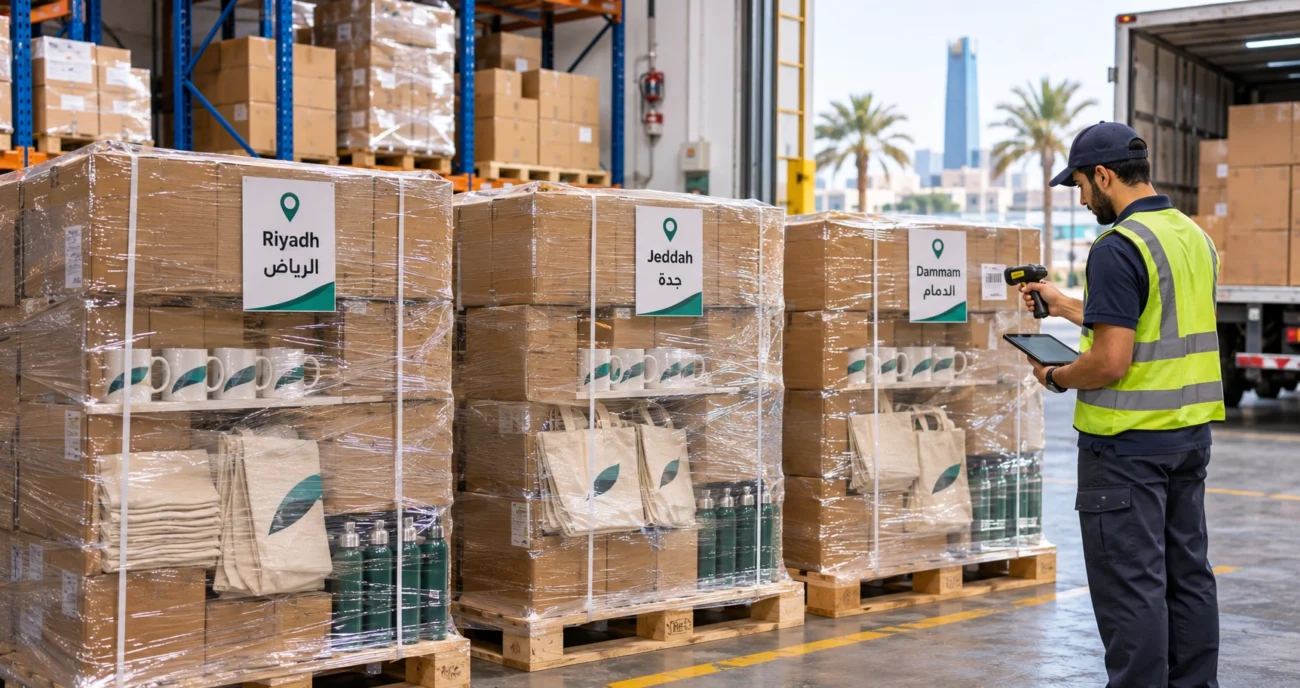
So plan where the stock sits, not just how much. The Ministry of Commerce counted 52,259 e-commerce registrations at the end of Q3 2026, up 25% on a year earlier, led by Riyadh (23,061), Makkah (13,177) and the Eastern Province (7,792). Those are the same regions most national branch networks are built around, so split reward stock across Riyadh, Jeddah and Dammam instead of shipping everything to head office. Check realistic production and delivery times for each city before you set reorder points.
How to Calculate Burn Rate and Reorder Point
This is the maths I walk every marketing team through before launch. Burn rate is how many rewards customers redeem per week; the reorder point is the stock level that should trigger the next production run.
Weekly burn rate = Active members × Monthly redemption rate ÷ 4.3
Reorder point = Weekly burn rate × (Restock lead time + Safety stock), in weeks
Say you have 40,000 active members and 3% redeem a Tier 1 reward each month. That is 1,200 a month, or about 280 a week. With a two-week local restock and two weeks of safety stock, you reorder when stock falls to roughly 1,120 units. With a five-week overseas lead time, the same programme has to reorder at about 1,960 units, and pay for all of them up front.
Then test the assumption. Check real redemptions every week for the first two months and reset the burn rate. Launch weeks always run hot.
Procurement Checklist for Loyalty Programme Merchandise
Run through this before the app goes live, not after the first stockout.
- Calculate the estimated burn rate for every reward, and recheck it weekly for the first two months.
- Set a reorder point per item, and agree with a local Saudi manufacturer that hitting it automatically triggers a restock run.
- Pick items that store and ship easily to branches. Keep fragile or bulky rewards out of the mass tiers.
- Standardize your logo files: one-color vectors for fast, cheap pad and screen printing, plus a full-color file for UV DTF.
- Approve a physical sample of every reward and keep it as the reference for repeat batches.
- Wash-test mugs and bottles that will see daily use.
- Split stock by region to match where your branches and online orders are.
- Build extra stock six to eight weeks before Ramadan and back-to-school.
- Confirm customer consent before using app data to personalize VIP gifts.
Frequently Asked Questions
What are the best small gifts for a customer loyalty programme in Saudi Arabia?
Durable items people use daily: metal key holders, ceramic mugs, thermal bottles and heavy cotton totes. Keep leather and engraved pieces for VIP tiers.
How much should a company spend on a loyalty reward gift?
Keep each reward a small share of what the customer spent to earn it, often a low single-digit percentage. VIP rewards can go higher because those customers are worth more.
Should loyalty program gifts feature a massive company logo?
No. A small, tidy logo gets the item used; a huge one turns the reward into an advert.
What happens if our loyalty rewards catalog runs out of physical stock?
Members lose trust and stop using the programme. Set reorder points and a restock agreement before launch so it never gets there.
Which printing method is the cheapest for bulk customer gifts?
Screen printing for fabric and pad printing for small hard items, especially with one-color logos. UV DTF costs more per unit but suits short full-color runs.
Can Print Me Factory ship loyalty merchandise directly to our retail branches in Riyadh and Dammam?
Yes. From Jeddah, delivery usually takes one to two business days to Riyadh and two to three to Dammam after production.


