
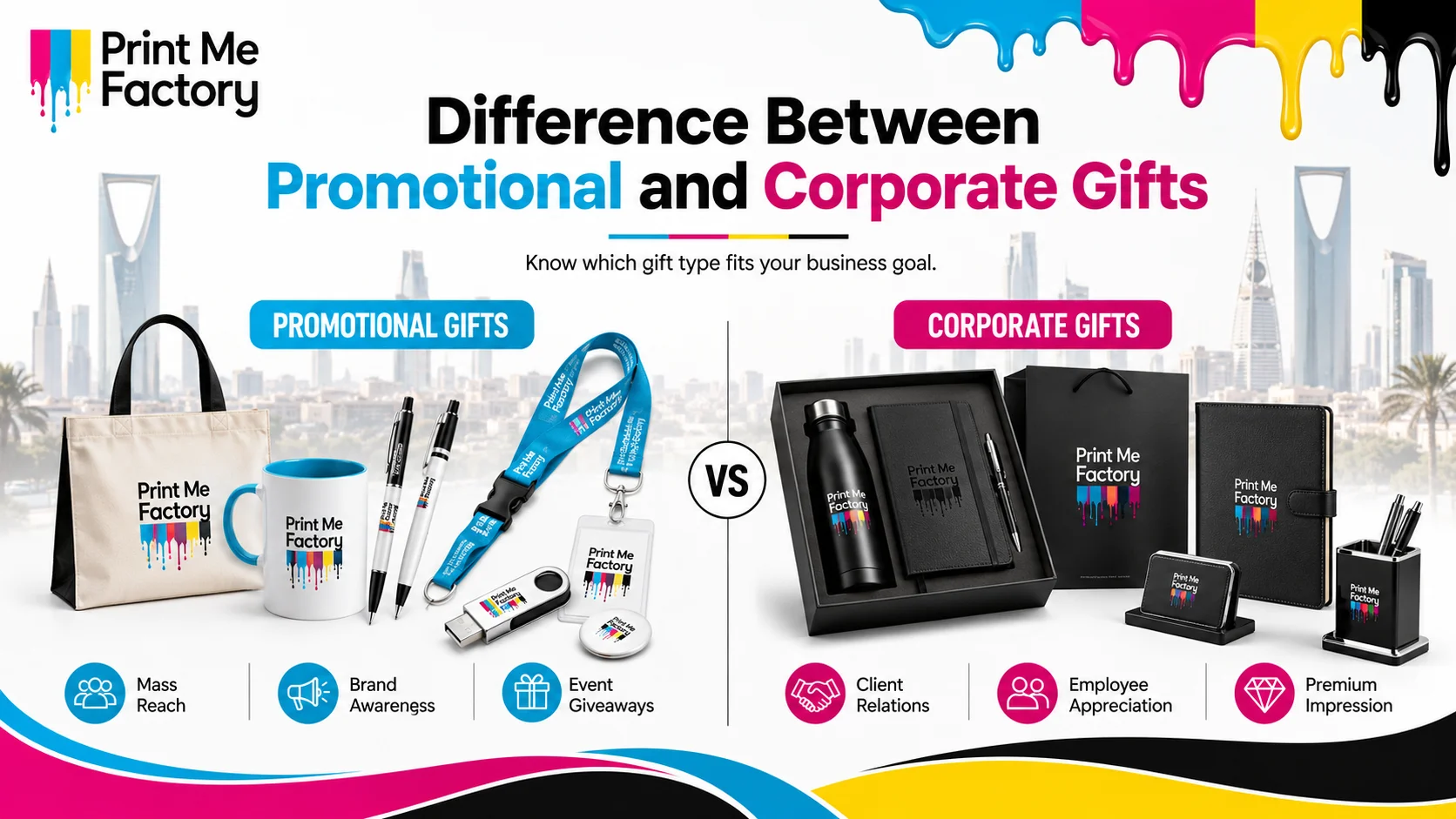
Short Answer: Promotional gifts are typically low- to mid-value items distributed in larger quantities to event visitors, prospects, or followers to increase brand awareness. Corporate gifts are usually higher-value, more personal items given to a smaller group of clients, business partners, or key employees to strengthen relationships and show appreciation. The main differences come down to audience, purpose, budget, timing, and personalization – choosing the wrong approach can mean overspending on mass giveaways or making an important relationship feel impersonal.
Most companies lump “gifts” and “giveaways” into one budget line, then wonder why neither one lands quite right. A trade show tote bag and a client’s anniversary gift box get ordered from the same mental category, priced against the same spreadsheet, and judged by the same vague sense of “did people like it.” They shouldn’t be – they’re doing two completely different jobs.
The stakes behind getting this right are only growing. Saudi Arabia’s marketing and advertising agency market is valued at roughly $3.19 billion in 2026, with a growing share of that spend going toward tangible touchpoints – branded items handed out at the exhibitions, launches, and campaigns driving that growth – alongside a completely separate pot of money spent on deeper, relationship-first corporate gifting. Both live in the same general “gifts” ecosystem, but one is marketing reach and the other is relationship depth.
Understanding the difference between promotional and corporate gifts changes how you plan both budget and campaigns – this guide breaks the distinction down properly and gives simple rules for when each one actually applies.

Definitions: Promotional Gifts vs Corporate Gifts
Promotional gifts
Items like pens, notebooks, totes, lanyards, basic drinkware, and small tech trinkets, branded and distributed at scale to attract attention and keep a logo visible in front of as many people as possible. This is brand awareness marketing in physical form – volume matters more than any single recipient’s reaction, and the goal is reach, not depth.
Corporate gifts
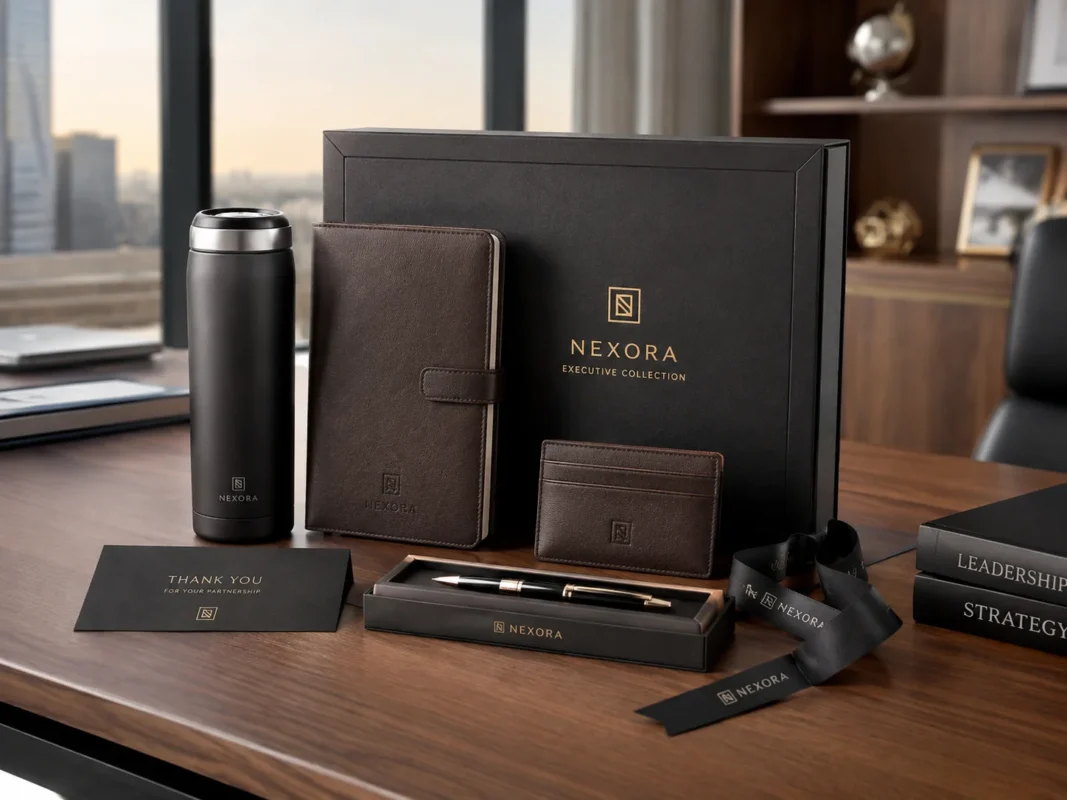
More considered items – curated gift sets, premium drinkware, high-quality apparel, executive accessories, personalized products – given to a specific person or small group. Fewer recipients, more thought per item, and a completely different measure of success.
Promotional = volume, reach, campaigns. Corporate = relationships, appreciation, loyalty. Once that split is clear, most of the confusion about budget and quality disappears on its own.
Difference Between Promotional and Corporate Gifts
Key Difference #1 – Purpose & Goals
Promotional gifts exist to build brand awareness and generate leads – trade shows, product launches, contests, social promotions. The item is a conversation starter or a walking reminder, not the point of the interaction itself.
Corporate gifts exist to build and maintain relationships – client appreciation, contract milestones, employee anniversaries, holiday gestures toward people who already know the brand well. A branded pen handed to hundreds of trade show visitors is doing one job. A curated gift box sent to a long-time client after a contract renewal is doing an entirely different one, even if both technically carry the same logo.
This split shows up clearly around the Saudi business calendar. A booth at a Riyadh exhibition or a National Day activation is promotional-gift territory – hundreds of visitors, a modest per-item budget, the goal being recall rather than relationship. A Ramadan gift sent to a handful of long-standing clients, or an Eid gesture to a key government partner, sits firmly on the corporate side – fewer recipients, more thought, and a completely different level of scrutiny on quality.
Key Difference #2 – Audience & Scale
Promotional gifts go out to broad, often anonymous audiences – prospects, event visitors, social media contest winners, a mailing list. Nobody on the receiving end is individually identified in the planning process; the whole point is that it doesn’t matter who specifically picks one up.
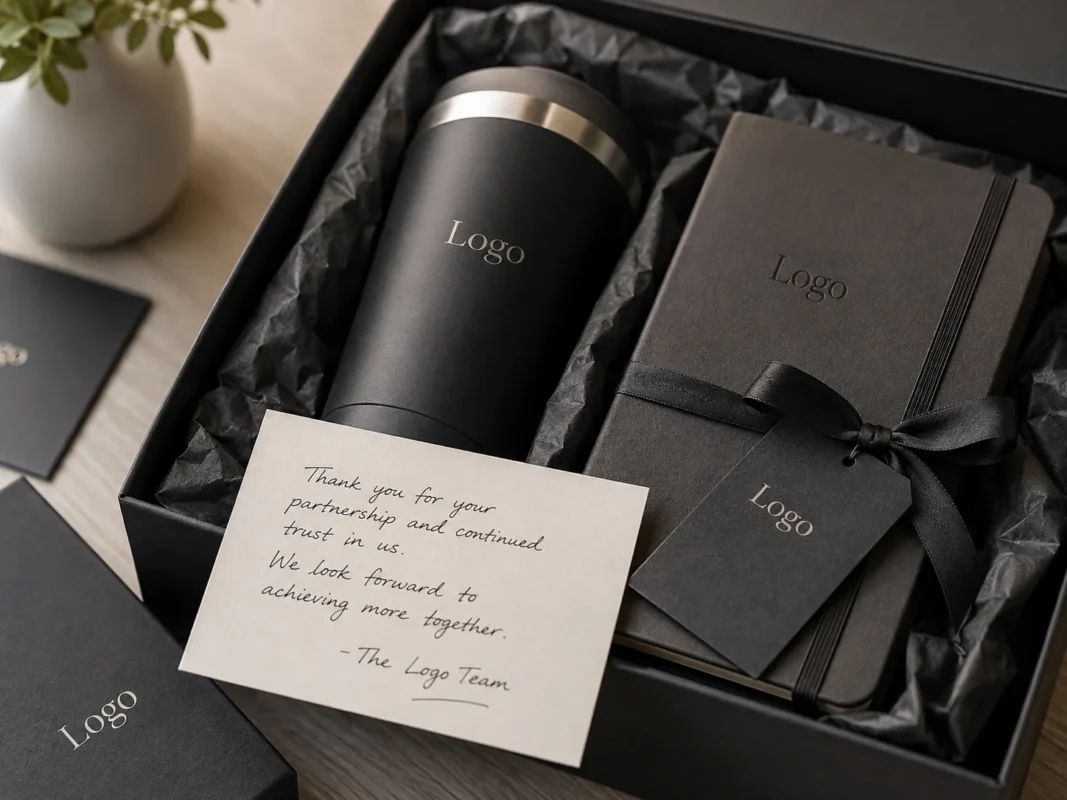
Corporate gifts go to narrow, defined audiences – key accounts, decision-makers, partners, managers, top performers, named individuals with a specific relationship to protect. Here’s where most teams get confused: the same physical product can move between categories depending entirely on context. A basic bottle handed out at a booth is a promotional gift. The same bottle, upgraded and placed inside a curated executive set with a handwritten note, is now a corporate gift – the object barely changed, but the intent behind it did.
Scale is the tell, more than the product itself. If a gifting decision starts with “how many do we need,” it’s promotional. If it starts with “who specifically is this for,” it’s corporate. That single question sorts most ambiguous cases faster than any spreadsheet.
Key Difference #3 – Budget Per Item & Per Campaign
Promotional gifts sit at low- to mid-cost per unit, because the math only works when you’re buying hundreds or thousands of them – pens, stickers, basic totes, simple tech accessories. Corporate gifts tolerate a much higher per-unit spend, because you’re gifting far fewer people and the relationship stakes justify it.
This is where most companies get the split wrong in one direction or the other. Splitting budget deliberately – a larger pool for broad promotional reach, a smaller but genuinely well-spent pool for a shortlist of strategic corporate gifts – beats either extreme: torching the whole budget on mass swag, or trying to impress a top client with something that was clearly bought by the pallet.
A rough rule that holds up across most industries: if the per-unit cost of a “corporate gift” is close to what you’d spend on a promotional item multiplied by ten, something is off – either the corporate gift is underspent for the relationship it’s meant to protect, or the promotional item has quietly become too expensive to distribute at the volume the campaign actually needs.
Key Difference #4 – Personalization & Experience
Promotional gifts carry light personalization at most – a logo, a tagline, maybe some campaign artwork. Nobody expects more than that from an item handed out to five hundred people, and adding more would be a waste of production budget.
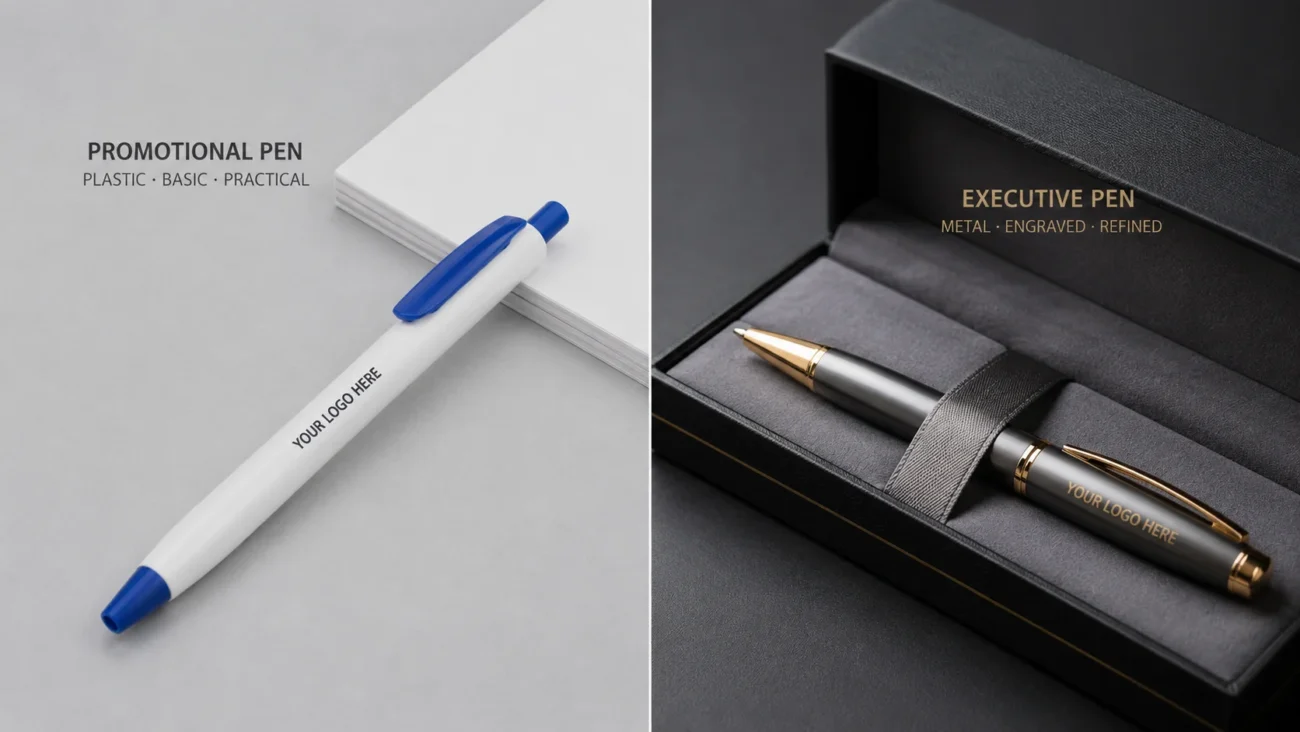
Corporate gifts go considerably deeper: the recipient’s name, a product genuinely chosen for them, a hand-signed note, custom wrapping. Clients notice the thought here in a way they simply don’t for a conference pen (yes, a plastic pen for a top client sends exactly the wrong message, no matter how good the logo print looks). Personalization is what signals that a gift was built around a specific relationship rather than pulled from a bulk order.
Examples of Promotional Gifts
A few categories that consistently do this job well:
- Branded pens and basic stationery from the Writing range – cheap enough to distribute by the hundreds, useful enough that a share of recipients actually keep them.
- Event tote bags and lanyards, often pulled from a Promotional Bags catalog – easy to hand out at registration, practical enough to survive the day.
- Low- to mid-range Drinkwares – simple bottles and mugs, not the insulated premium versions reserved for corporate gifting.
- Small Technology Gifts like USB drives, cable organizers, and phone grips – modern-feeling, inexpensive at volume, easy to brand.
- Stickers, badges, and small apparel pieces for mass campaigns, where the goal is visibility rather than a keepsake.
Examples of Corporate Gifts
And the categories that consistently work on the relationship side of the ledger:
- Curated Gift Sets and hampers – food, drink, and lifestyle items combined into one coherent, boxed presentation.
- Premium drinkware and barware, upgraded well past whatever gets handed out at a booth.
- Travel items – suitcases, packing cubes, and other pieces from a Travel Essentials range – suited to executives and frequent-traveling clients specifically.
- Executive desk accessories and leather goods, including a well-made Wallets piece or a Desk Items Sets organizer – the kind of item that sits on a desk for years, not a table for a day.
- Experience and digital gifts – subscriptions, curated experiences, tickets – reserved for relationships where a physical object isn’t actually the point.
These are, deliberately, not mass-distributed. The moment a “corporate gift” starts going out to two hundred people, it has quietly become a promotional gift with a bigger price tag attached.
When to Use Promotional Gifts vs Corporate Gifts
Use promotional gifts when:
- You’re running a campaign or attending a trade show and need volume.
- You need lots of touchpoints at a low per-item cost.
- The goal is visibility and conversation starters, not deep recognition.
Use corporate gifts when:
- You want to thank or genuinely impress a specific client or partner.
- You’re marking a milestone, renewal, or major deal.
- The goal is relationship strength, loyalty, and long-term value – not immediate visibility.
A product launch usually calls for promotional gifts – broad reach, modest cost, a logo on something useful enough to be picked up. A five-year client relationship approaching renewal calls for the opposite: fewer gifts, more thought, a budget that reflects what that account is actually worth.
A third scenario worth naming specifically: a company exhibiting at a major Saudi trade show while also hosting a handful of VIP delegation meetings on the sidelines. That’s not a single gifting decision – it’s two, running in parallel. The booth needs promotional volume for anyone who walks past. The VIP room needs a short list of proper corporate gifts, planned separately, for the handful of people whose relationship actually matters to the deal on the table.
Budget & ROI – How to Balance Both Types
The smart approach almost always means allocating separate budgets – one for promotional campaigns, one for relationship-driven corporate gifting – rather than one blended pool that gets stretched thin across both jobs.
ROI looks completely different on each side. Promotional gifts get measured in impressions, booth traffic, and new contacts collected. Corporate gifts get measured in retention, upsells, and referrals – numbers that show up months later, not on the day of the event. That lag is exactly why corporate gifting budgets get cut first when leadership wants a quick win: the payoff isn’t visible next week. It’s worth remembering what that payoff is actually worth – Harvard Business Review’s widely cited research found that a 5% increase in customer retention can lift profits by 25% to 95%, which is the entire economic case for spending real money on a smaller number of relationships instead of stretching a promotional budget to cover everyone.
Cutting corporate gift budgets too low to fund more swag is a common, quietly expensive mistake. So is the reverse – treating every prospect like a five-year client and running out of budget before the campaign that actually needed the volume.
Common Mistakes Companies Make
- Using cheap promotional items as corporate gifts for important clients. Do this instead: reserve a genuinely separate, higher-quality product line for named relationships, even if it’s a small list.
- Sending very expensive gifts to broad audiences that don’t justify the spend. Do this instead: save premium items for the shortlist where the relationship actually earns it.
- Mixing goals – trying to run lead generation with high-end gift sets, or trying to build a deep relationship with a mass-produced item. Do this instead: pick one goal per gifting decision and let the category follow from it.
- Ignoring recipient context – demographics, values, sustainability preferences – and defaulting to whatever’s easiest to order in bulk. Do this instead: let the audience shape the category, not just the budget.
FAQs
What is the main difference between promotional gifts and corporate gifts?
Promotional gifts are low-cost items distributed in bulk to build brand awareness. Corporate gifts are higher-value, more personal items given to a small, specific group to build or maintain a relationship.
Can the same product be used as both a promotional and a corporate gift?
Yes – the product category often overlaps (a bottle, a notebook), but the quality tier, personalization, and audience size determine which category it actually falls into.
How much should I spend on a promotional gift vs a corporate gift?
Promotional gifts typically run low-cost per unit because you’re buying in bulk. Corporate gifts can justify a much higher per-unit spend since the audience is far smaller and the relationship stakes are higher.
Are eco-friendly items better as promotional or corporate gifts?
They work well in both categories. At scale for a campaign, eco-friendly promotional items signal brand values to a broad audience; as a corporate gift, a premium eco-friendly item signals the same values with more personal weight.
How do I measure ROI on promotional giveaways?
Track impressions, booth traffic, leads collected, and follow-up engagement tied to the campaign the items supported – the same way you’d measure any other awareness-stage marketing activity.
How do I measure ROI on corporate gifts?
Look at retention, contract renewals, upsells, and referrals from the specific accounts or individuals who received a gift, tracked over months rather than days.
Can small businesses use corporate gifts, or are they only for large companies?
Small businesses often benefit more, proportionally, since a handful of key client relationships can represent a large share of total revenue – a well-chosen corporate gift to the right person carries real weight regardless of company size.
How should I split my budget between promotional and corporate gifting?
There’s no universal ratio, but a common approach is a larger pool for broad promotional reach and a smaller, protected pool reserved specifically for a defined list of key relationships – decided before the year’s campaigns start, not improvised afterward.


3 thoughts on “Difference Between Promotional and Corporate Gifts”
Comments are closed.