
Quick answer: Finalize your recipient tiers and exact Arabic typography first, then approve a mockup – ideally a physical sample – and your full multi-city delivery details well before your required-in-hand date. 4 to 6 weeks is a sensible planning baseline, more for bespoke boxes, personalized items, or anything landing during Ramadan or National Day. Overseas sourcing adds customs and freight risk that a tight deadline can’t absorb; a local manufacturer can inspect, correct, and dispatch from one building.
A procurement manager in Riyadh called our Jeddah factory last Ramadan with 2,000 names, a kitting list, and nine working days until a distribution deadline across three regions. That call is not unusual. Saudi companies increasingly plan الهدايا المؤسسية (corporate gifting) at a scale that turns a design decision into a logistics operation, and the gap between those two things is exactly where bulk orders go wrong. Branding a single product is a straightforward production run. Packing, personalizing, and dispatching thousands of multi-item Gift Sets to offices across the Kingdom is a different kind of project – one with dependencies that a quotation alone will not reveal, and one that depends as much on Corporate Gifts in Saudi Arabia being sourced from a manufacturer built for volume as it does on the design itself.
This checklist walks through what actually determines whether a bulk order lands on time: how recipients are tiered, how Arabic and English names are proofed, how a box is physically assembled without items shifting in transit, and how cartons get matched to the right branch in the right city. None of it is theoretical – it is the same groundwork we cover when choosing a corporate gifts supplier matters most, applied specifically to the moment an order moves from “50 pieces” to “5,000.”
The “Scale Trap”: Why Bulk Orders Fail in the 11th Hour
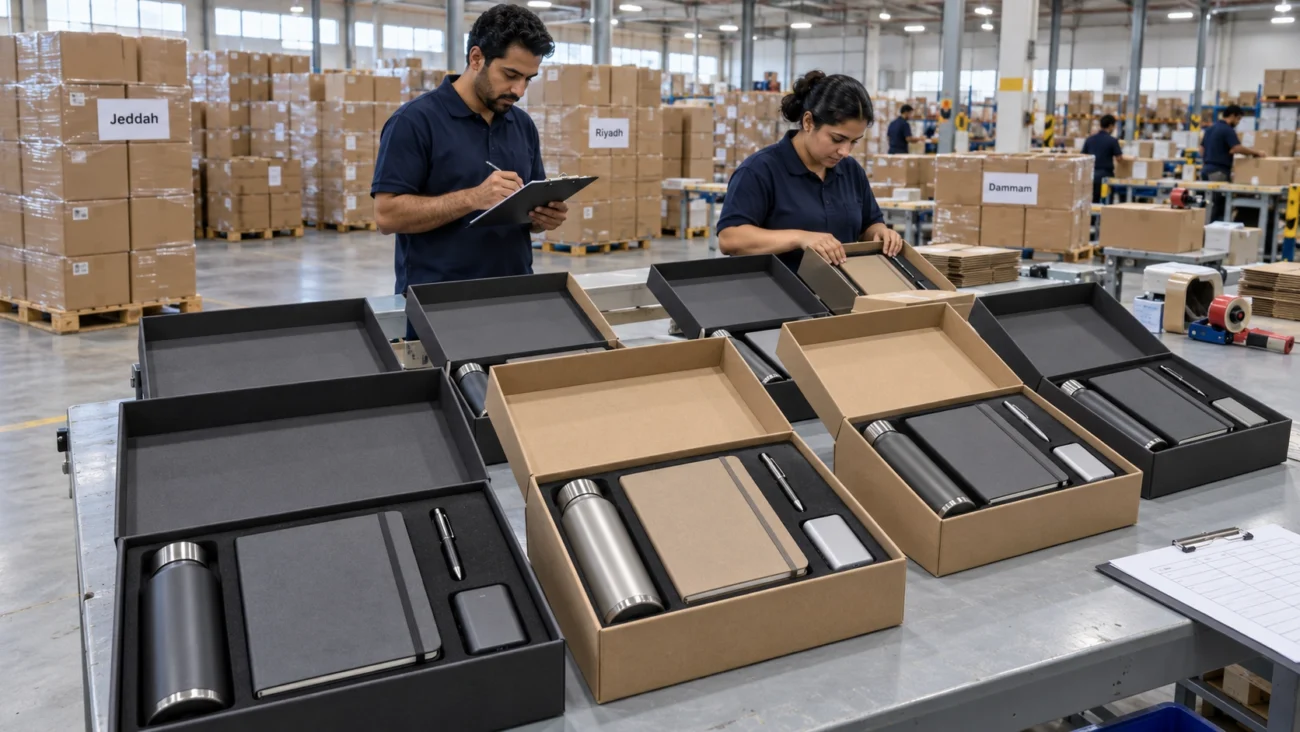
Printing 1,000 thermos flasks takes one machine setup and one run. Building, packing, and sealing 1,000 custom magnetic boxes that each hold three separate items is a different job entirely – every box needs the right combination of products checked, arranged, and closed by hand or semi-automated line, and that step has no shortcut. Companies that quote the first number and assume the second follows at the same pace are the ones calling nine days before an event. The general production and delivery times quoted for a single branded item rarely account for the extra kitting stage a multi-item set requires.
The trap gets sharper around fixed dates. Eid and National Day both land on calendar dates that do not move for a production delay, and both compress a large share of the Kingdom’s annual gifting volume – including a wave of Saudi National Day gift sets for employees and clients – into a short window. The scale of that window is not abstract – Saudi point-of-sale spending in the single week before National Day 2026 ran to roughly SAR 14.17 billion across 237.3 million transactions, about 5.7% higher than the equivalent week a year earlier. Every supplier serving that period – printers, box makers, freight couriers – is working against the same calendar, so a company that starts sourcing in the week before National Day is competing for capacity, not just placing an order.
Overseas freight makes the trap worse, not better, in a tight window. A shipment can clear customs cleanly in most cases, but documentation gaps, conformity checks, or a missed vessel connection can still add days a domestic order never risks, and there is far less time to react once a container is already at sea. None of this means every overseas order is delayed – it means the time buffer that absorbs a problem shrinks to almost nothing once a hard event date is set.
The Bulk Gift-Set Ordering Checklist, Phase by Phase
Everything that determines whether a bulk order lands on time sits inside four dependent phases – tiering and budget, design and personalization, physical assembly, and domestic delivery. Each phase feeds the next: a tier list that is not finalized delays artwork approval, artwork that is not approved delays kitting, and kitting that is not finished on schedule delays dispatch. The condensed, scannable version of these four phases is The Ultimate 10-Point Bulk Ordering Checklist further down – read the phases first if this is your first large order, or jump straight to the checklist if you already know the process and need a final pass before requesting a quotation.
Phase 1: Tiering, Budgeting, and Item Selection
Before anyone can quote a bulk order accurately, the recipient list has to be split into tiers. A single flat specification – “2,500 identical boxes” – almost never matches reality. A company ordering for a workforce usually has VIP executives or investors, a large standard-employee population, new joiners being recognized separately, and a wider pool of event visitors or campaign recipients who need something, but not the same thing.
One practical way to stretch a budget without diluting the top tier: pair one higher-value “hero” item – a metal power bank, a leather folio – with useful, lower-cost pieces in the same box, rather than spreading the budget evenly across every tier. A business with a mixed-tier program often fills its lower tiers with the same promotional gifts it would use for a trade show, reserving a distinct hero item only for the smaller VIP and executive list.
Recipient-Tier Decision Table
| Recipient Tier | Typical Purpose | Appropriate Gift Level | Branding Approach | Packaging Priority |
|---|---|---|---|---|
| VIP Executives / Investors | Relationship-building, prestige, retention | Premium, few hero items | Subtle logo on box, name on personal item | Rigid box, high presentation detail |
| Standard Employees | Recognition, morale, internal campaigns | Practical, consistent quality | Logo-led, consistent across tier | Durable box, moderate presentation |
| New Joiners / Recognition | Onboarding, individual acknowledgment | Modest but personalized | Name or initials on one item | Simple box, clean unboxing feel |
| Event Visitors / Mass Campaign | Awareness, broad distribution | Practical, mass giveaway level | Logo-only, bulk branding | Simple sleeve or bag, speed over detail |
Exactly what belongs in each tier is a business decision, not a fixed Saudi standard – the table above describes relative positioning, not a universal price list. What matters for ordering purposes is settling the tier structure before requesting a quotation, because a manufacturer cannot give an accurate number against “some premium, some standard” – it needs a quantity per tier.
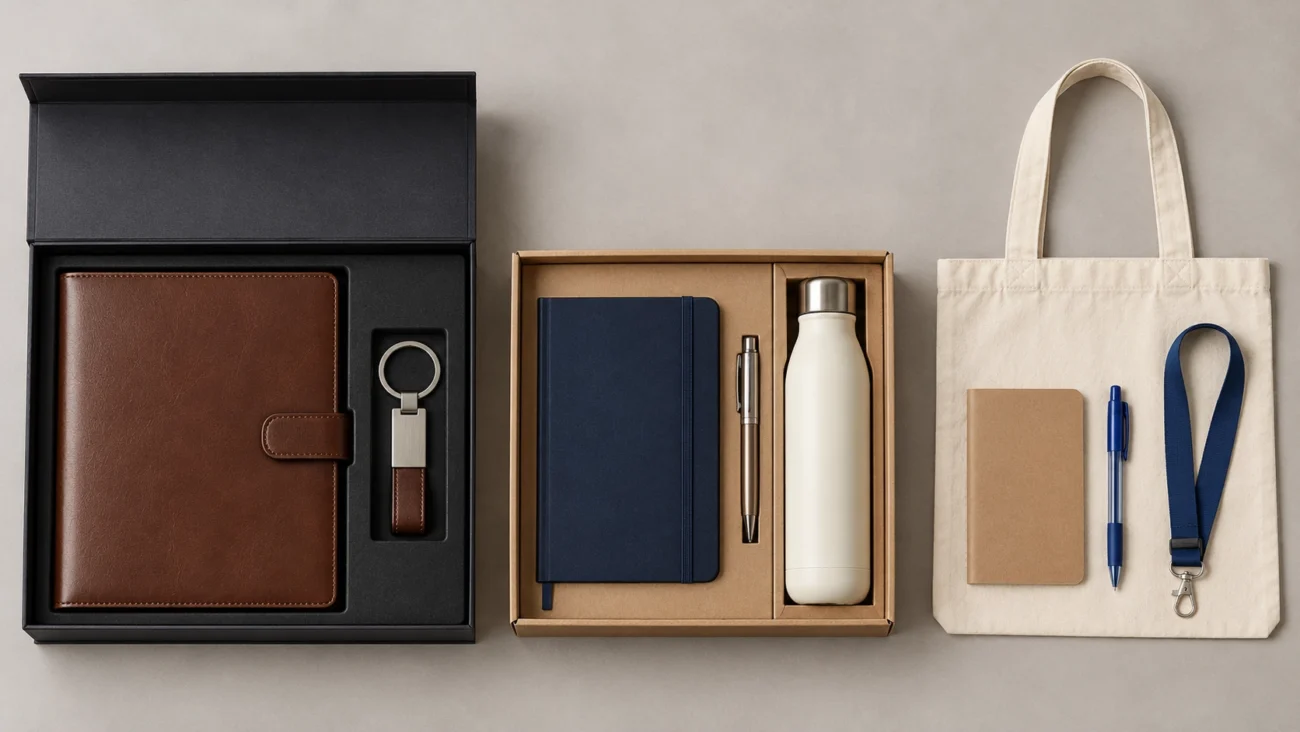
Before requesting a final quotation, a procurement team should have ready: total quantity and quantity per tier; recipient type for each tier; the required-in-hand date, the event date, and an acceptable delivery window (these are not the same date); a target budget per set and a total approved budget; preferred products and acceptable substitutes if stock runs short; the branding method needed on each item; packaging style, box dimensions, and presentation level; logo files, brand guidelines, Pantone references, and bilingual copy; a personalization spreadsheet with a nominated spelling approver; a delivery breakdown by city, branch, and carton quantity; whether a sample or pre-production proof is required; and agreed VAT, invoicing, payment, and replacement terms. A quotation built without this information gets revised at least once – usually after the first mockup round, when the real specification finally surfaces.
Phase 2: Design, Arabic Typography, and Variable Data Printing
Artwork for a bulk run needs to arrive as vector artwork – scalable files, commonly supplied as AI, EPS, or a print-ready vector PDF, that keep a logo sharp whether it is printed on a 3-centimeter pen clip or a 30-centimeter box lid. A raster logo pulled from a website looks fine on screen and breaks down the moment it is engraved or printed at true production size.
Color matching runs on a Pantone reference – a standardized color target that guides brand-color matching across production methods. A Pantone number is a guide, not a guarantee: coated metal, fabric, kraft paper, plastic, and a screen display can all reproduce the same reference slightly differently, which is one reason a physical sample matters more than a digital proof once a project has real color stakes.
Where Arabic Script Actually Breaks
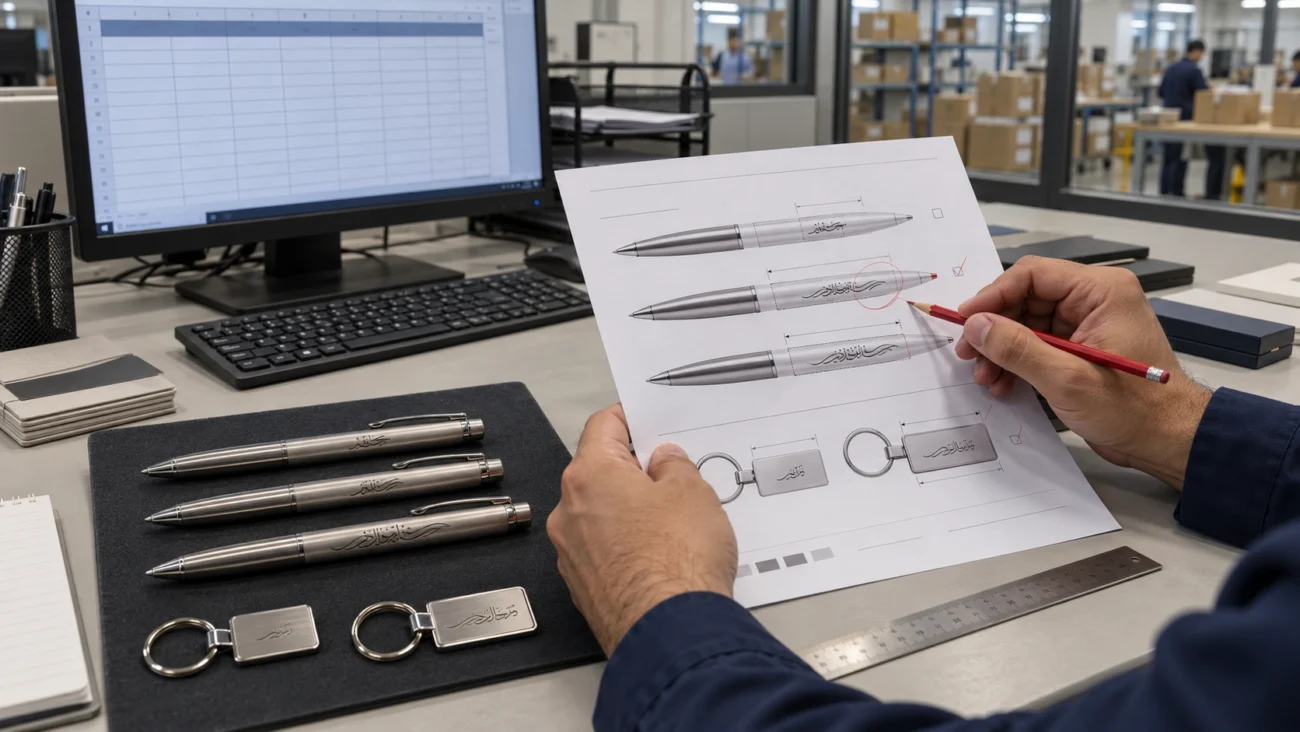
This is also where the decision between logo or recipient name personalization stops being a design question and becomes a production one. Arabic letterforms are contextual and connect differently depending on position in the word, and a name that looks correct in a screen-size proof can still disconnect or misalign once scaled down to a 4-millimeter engraving line. We check four specific cases on every personalization run before it starts: the longest Arabic name on the list, the shortest, the longest English name, and any honorific or title attached to a name – not an average-length example, because the average is never the one that breaks.
This personalization work runs through Variable Data Printing (VDP) – a workflow that combines one approved master layout with a structured data file, so a name, department, or branch detail changes from one item to the next without a new manual setup each time. VDP is efficient once it is configured correctly, but it does not mean every product can be personalized at the same speed: machine setup, item loading, engraving or print position, drying or curing time, and quality inspection all still take real production time per unit, not per batch.
Names should never arrive as a screenshot. The working file should be one version-controlled spreadsheet, one recipient per row, with separate columns for Arabic name, English name, honorific, department, gift tier, branch, delivery city, and approval status – not names scattered across several WhatsApp threads and email chains that someone has to reconcile by hand.
Access to that file should stay limited to the client’s nominated project owner and the production staff actually running the job; there is no reason for a personalization spreadsheet to carry ID numbers or unrelated personal notes beyond what fulfillment requires. One person on the client side – not HR, marketing, and the executive office all submitting separate corrections – needs the authority to approve spelling, honorifics, tier placement, and final sign-off, because conflicting approvals stall a production line even when the physical stock is sitting ready.
Phase 3: The Assembly and Kitting Reality
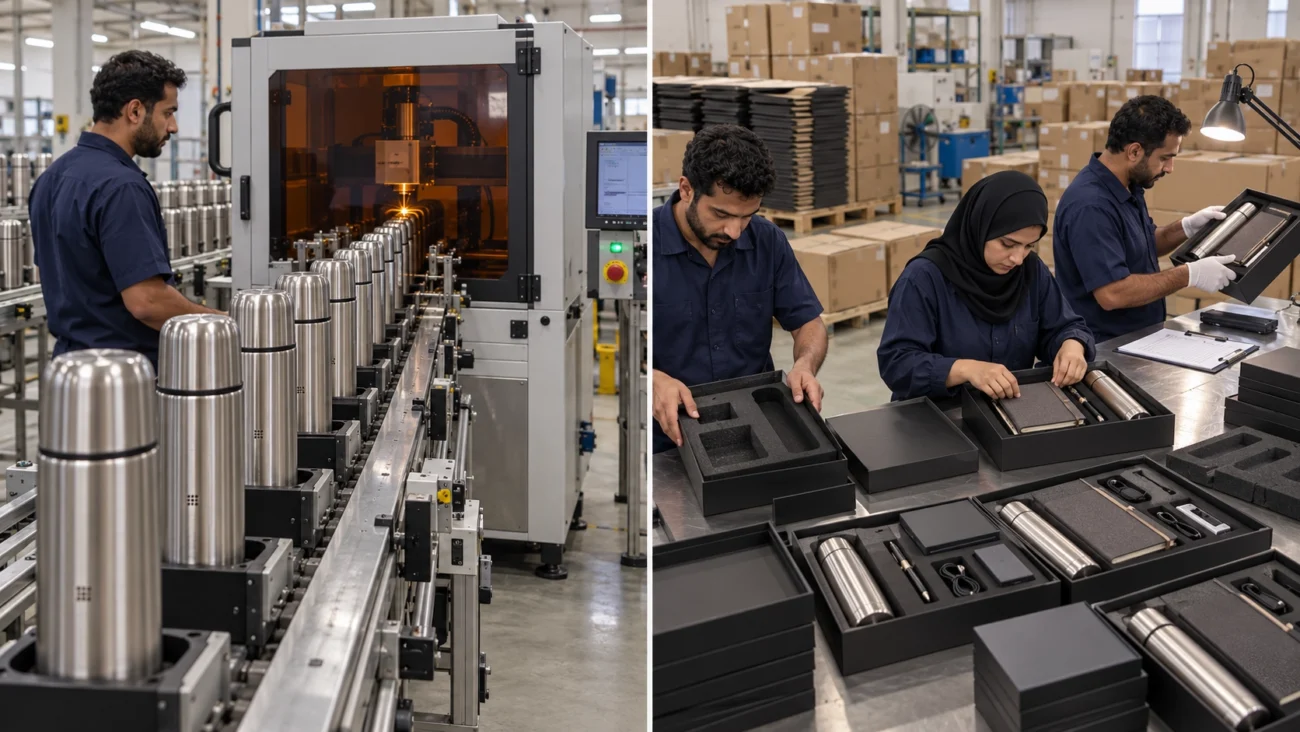
This is the step a quotation rarely prices accurately: kitting – the controlled process of collecting, checking, arranging, and packing multiple components into one complete set. A three-item VIP box with a crystal award, a metal thermos, and a leather notebook needs a custom-cut EVA foam insert – a precisely cut cavity layout that holds each product in a fixed position inside the box. A cavity cut even three millimeters too wide lets a crystal piece shift and knock against the thermos every time the carton moves, and EVA foam alone does not prevent that kind of damage – cavity accuracy, foam density, carton protection, packing orientation, and careful transport handling all have to work together.
The box is not finished when the branding is printed. Every one of those boxes still needs a person – or a semi-automated line – to place the verified product inside, check that the branding is aligned, match the personalization against the controlled list, inspect the surface for defects, and seal it. At true volume, that is a physical-space and labor question as much as a design question, which is exactly why a dedicated in-house assembly floor changes the realistic timeline for an order in the thousands.
Quality-Control Gates
A bulk run that skips structured checkpoints finds its defects at the worst possible stage – after sealing, with no time left to fix them. The gates we run a complex order through:
- Gate 1 – Product approval: model, material, color, dimensions, functionality, and stock confirmed.
- Gate 2 – Artwork approval: logo version, size, placement, color, and decoration method confirmed.
- Gate 3 – Arabic approval: spelling, titles, right-to-left direction, connected letterforms, and bilingual order checked.
- Gate 4 – Packaging approval: external box dimensions, insert fit, opening direction, finish, and branding confirmed.
- Gate 5 – Production sample: the real decorated item inspected whenever order value or complexity justifies it.
- Gate 6 – In-process inspection: a controlled sample checked during the run, not only after it finishes.
- Gate 7 – Packing audit: item count, personalization match, accessories, cards, and box condition verified.
- Gate 8 – Dispatch audit: cartons, labels, packing lists, destination cities, branch codes, and receiver details matched.
This is not a certified standard – it is the sequence that catches a mismatched name or a misaligned logo before it reaches a recipient instead of after. Material compatibility matters here too: laser engraving (a permanent process that removes or alters a surface finish) suits metal and some coated items, UV DTF (a transfer-based full-color method) works on compatible hard surfaces, and screen printing, pad printing, embroidery, debossing, and foil stamping each suit different materials. These methods are not interchangeable, and a flat digital mockup cannot fully predict how a design will sit on a curved thermos, textured leather, or coated metal versus a fabric item.

Phase 4: Domestic Logistics and Multi-Branch Fulfillment
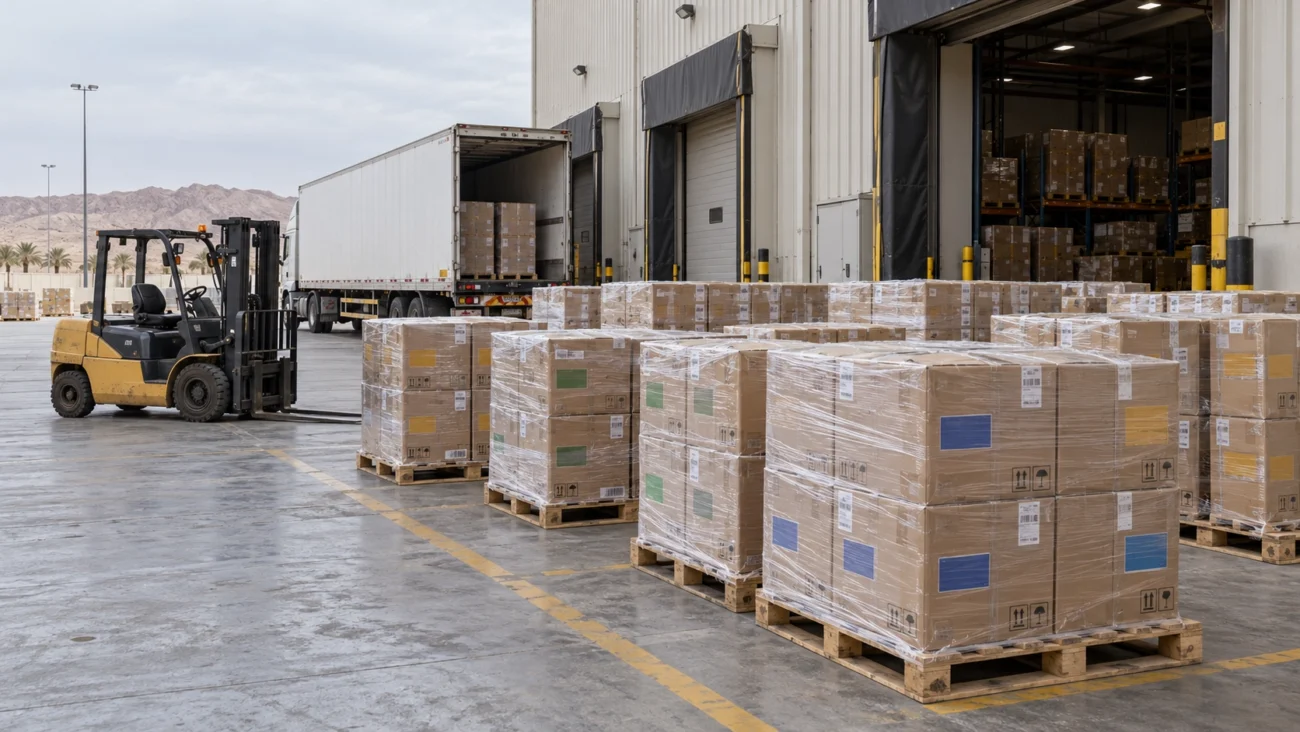
“Deliver to Riyadh” is not a complete instruction once an order splits across more than one location. A nationwide rollout needs full branch addresses or map pins where formal addressing is unclear, a named receiver with an active Saudi mobile number at each stop, delivery windows, any loading-dock or access requirements, carton quantity per location, branch codes, a packing list per destination, and whether proof of delivery is required. Weekend, holiday, or office-hour restrictions and instructions for a refused or undelivered shipment belong in that same brief, not worked out after a truck is already loaded.
On the floor, this becomes carton numbering matched to packing lists, shrink-wrapping and edge protection for palletizing (arranging sealed cartons on a pallet for stable transport and easier freight handling), moisture and dust protection where the route calls for it, and a decision between a dedicated truck and a parcel courier network depending on volume and destination spread. VIP cartons usually travel separately from standard-tier cartons specifically so they are not buried in a stack and opened last. Keeping a small amount of unpersonalized contingency stock on hand covers late additions or a damaged unit without restarting an entire production run for one item.
Domestic capacity to support this kind of multi-city fulfillment has been expanding. Saudi Arabia’s existing commercial registers in e-commerce and logistics both grew through the second quarter of 2026 – e-commerce registrations rose 23% to 48,497 and logistics registrations rose 25% to 29,856, concentrated in Riyadh, Makkah Province, and the Eastern Province – according to the Ministry of Commerce’s Q2 2026 report. That growth in registered local logistics operators is part of why coordinating branding, kitting, and multi-branch dispatch from one Jeddah facility is a realistic option today in a way it was not a few years ago, when more of this work routed through intermediaries.
“Local manufacturing” still needs a precise meaning, though. Branding, printing, engraving, box production, kitting, assembly, quality control, and domestic dispatch can genuinely run in one Saudi facility. That is different from claiming every base product – a thermos shell, a notebook cover – was manufactured from raw materials inside the Kingdom, which is not something every supplier can verify and should not be assumed.
The Ultimate 10-Point Bulk Ordering Checklist
This is the four phases above condensed into one final pass – run through it right before you send a request for quotation, and again right before you authorize the production run.
- Required-in-hand date and event date confirmed separately – the event date is not your production deadline; work backward from when items must be counted and distributed.
- Recipient tiers, quantities, and contingency stock finalized – including an unpersonalized buffer for late additions or damaged units.
- Budget per tier and total approved spend established – before design work starts, not after the first mockup.
- Products, colors, materials, functionality, and stock confirmed – with an agreed substitute if a preferred item runs short.
- Vector logos, brand guidelines, and Pantone references supplied – raster files from a website are not production-ready.
- Arabic and English text approved in one version-controlled spreadsheet – with the longest and shortest names on the list checked, not just an average one.
- Digital mockups – and a physical sample for complex or high-value orders – approved – because color, engraving contrast, and material feel differ from a screen proof.
- Box structure, insert fit, item orientation, and packing sequence tested – a cavity a few millimeters off is enough to let a fragile item move in transit.
- Delivery cities, branch quantities, receiver details, and access requirements mapped – before a single carton is loaded.
- Written production, quality-control, invoicing, replacement, and dispatch terms approved – as an agreed commitment in the quotation, not an assumed guarantee.
FAQs
How far in advance should a Saudi company order bulk corporate gift sets?
Four to six weeks is a sensible planning baseline for a customized order of standard complexity. Bespoke boxes, imported components, individually personalized items, orders above roughly 5,000 units, or anything landing during Ramadan or National Day peak demand should start earlier, since production and delivery capacity across the market tightens around those same dates.
What is the minimum order quantity (MOQ) for custom employee gift boxes?
There is no single MOQ that applies across every product. It depends on the specific item, the decoration method, whether custom packaging is involved, and whether personalization is required – a manufacturer needs those specifics before quoting a minimum, so treat any flat number quoted without that context with caution.
Can a bulk gift order be split and shipped to different cities in Saudi Arabia?
Yes, but only once quantities, full addresses, branch codes, named receivers with active mobile numbers, and delivery windows are confirmed for every location before dispatch. A single destination city is not enough information for a multi-branch rollout.
How do you ensure items don’t break inside the gift box during shipping?
Protection depends on several things working together: a precisely cut foam or insert cavity matched to the product’s exact dimensions, an appropriate foam density, solid carton construction, correct packing orientation, and careful transport handling. No single material, including foam, prevents damage on its own if the cavity fit is wrong.
Do I need to provide a separate design file for every employee’s name?
No. Variable Data Printing normally combines one approved master layout with a structured spreadsheet of names, so a separate manual artwork file per person is generally unnecessary. What does matter is proofing the longest and shortest names on the list before the full run starts.
Why is local manufacturing faster for bulk corporate gifts than overseas sourcing?
Local manufacturing is often faster because branding, proofing, corrections, kitting, inspection, and domestic dispatch can all be coordinated from one facility without waiting on international freight schedules or customs documentation. This does not mean every local order is automatically faster than every overseas one – it means fewer dependencies sit outside the manufacturer’s direct control.
Should we approve a physical sample before producing 1,000 gift boxes?
For a high-value, complex, or multi-item order, yes. A digital mockup cannot verify how a material actually feels, how well print or engraving adheres to the real surface, or whether the foam insert truly holds every component in place – a physical pre-production sample is the only way to confirm those details before committing to the full run.


